The 10-Second Trick to Make Cheap Dog Food Taste Gourmet
Every dog owner has been there: you’re standing in the pet food aisle, looking at the staggering prices of “human-grade,” “refrigerated,” and “locally-sourced” dog foods. Your heart wants the best for your furry friend, but your wallet is screaming for mercy. You opt for the budget-friendly kibble, but when you pour it into the bowl, your dog gives you that look—the one that says, “This again?”
What if you could bridge the gap between a budget-friendly bag of kibble and a five-star culinary experience? What if the secret to transforming dry, dusty pellets into a mouth-watering feast took only ten seconds?
It’s not magic, and it doesn’t require a culinary degree. The 10-second trick to making cheap dog food taste gourmet is the strategic application of warmth and moisture.
By simply adding a small amount of warm water or low-sodium broth and allowing it to sit for a few seconds, you unlock the “hidden” flavors trapped in the kibble. But that’s just the beginning. In this comprehensive guide, we will explore why this trick works, how to master it, and several other low-cost ways to turn your dog’s mealtime into the highlight of their day.
The Science of the “10-Second Trick”
To understand why adding warm liquid works so effectively, we have to look at the biology of a dog. Dogs have roughly 1,700 taste buds (humans have about 9,000), which means they don’t taste food quite as intensely as we do. However, their sense of smell is between 10,000 to 100,000 times more acute than ours.
1. Releasing the Aromatics
Dry kibble is manufactured using a process called extrusion. The ingredients are cooked at high temperatures and then dried to make them shelf-stable. During this process, fats and flavor enhancers (often called “palatants”) are sprayed onto the outside of the kibble. When the food is dry and room temperature, these aromas are “locked in.”
When you add warm water (not boiling, but comfortably warm), it begins to dissolve those surface fats and releases the aromatic molecules into the air. To a dog, this is the equivalent of walking into a kitchen where a fresh roast is coming out of the oven. The scent profile expands exponentially, instantly signaling to the dog’s brain that it’s time for a high-value meal.
2. Creating a “Gravy” Texture
Most cheap dog foods are uniform in texture—hard and crunchy. While this can be good for scraping some plaque off teeth, it isn’t very exciting. By adding liquid and waiting 10 to 30 seconds, the outer layer of the kibble softens, creating a savory “gravy.” This mimicry of wet food (which is significantly more expensive) provides a variety in mouthfeel that dogs find irresistible.
3. Improving Digestion and Hydration
Beyond taste, this trick has a physiological benefit. Many dogs, especially those on purely dry diets, live in a state of mild dehydration. Adding water to the bowl ensures they are getting moisture with their meal. Furthermore, slightly softened food is easier for the stomach to break down, which can reduce bloating and gas in dogs with sensitive digestive systems.
How to Execute the Perfect 10-Second Trick
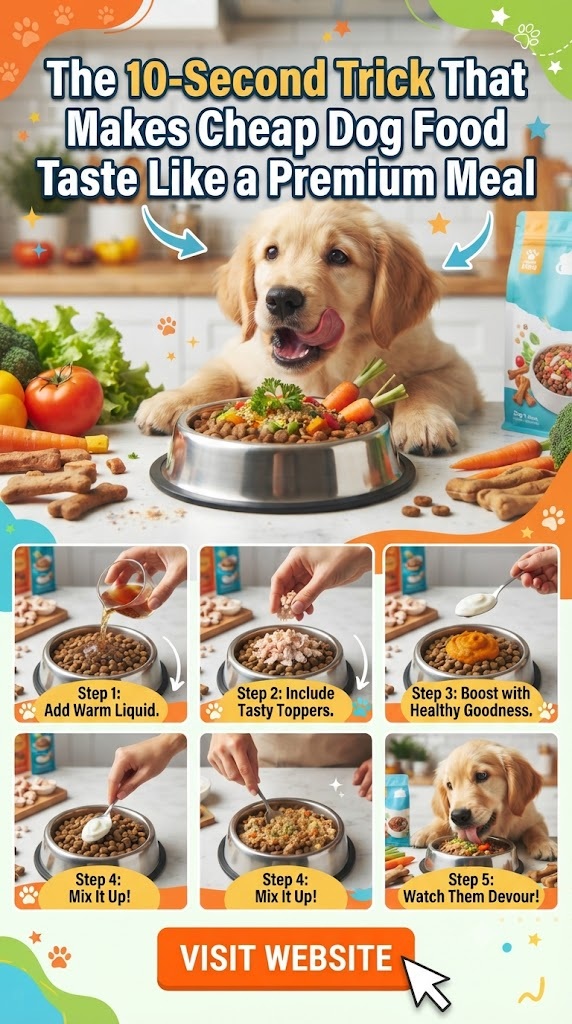
While it sounds simple, there is a “goldilocks” method to getting this right. Follow these steps for the best results:
- Step 1: Portion the Kibble. Put the usual amount of dry food in your dog’s bowl.
- Step 2: Use Warm Liquid. Use warm filtered water or a dog-safe bone broth. Avoid using boiling water, as it can destroy certain heat-sensitive vitamins and probiotics added to the food.
- Step 3: The Ratio. Aim for about 1/4 cup of liquid for every cup of kibble. You don’t want the food swimming like cereal; you want it coated.
- Step 4: The 10-Second Swirl. Stir the food for about 10 seconds. This ensures the liquid touches every piece of kibble and starts the aromatic release immediately.
- Step 5: Serve. If you have an extra 20 seconds, let it sit to create a thicker “stew,” but for most dogs, the instant release of scent is enough to get them excited.
Gourmet Add-Ons: The “30-Second” Upgrades
If you want to take your “gourmet on a budget” game to the next level, you can add a “topper.” These are common kitchen staples that cost pennies per serving but provide massive nutritional boosts and flavor.
The Power of the Egg
An egg is nature’s perfect protein. It contains essential amino acids, fatty acids, and vitamins.
- How to do it: Crack a raw egg (if your dog handles raw well) or a scrambled egg over the kibble. The runny yolk acts as a rich, creamy sauce that coats the dry bits.
- Cost: Approximately $0.15 – $0.25 per meal.
The Sardine Secret
Canned sardines (in water, no salt added) are a nutritional powerhouse. They are loaded with Omega-3 fatty acids, which promote a shiny coat and brain health.
- How to do it: Mash one or two sardines into the kibble. The strong fishy scent is like “dog nip.”
- Cost: A $1.50 can provides about 4-5 servings.
Pumpkin Puree (The Digestion Hero)
Plain canned pumpkin (NOT pumpkin pie filling) is packed with fiber and beta-carotene.
- How to do it: Add a tablespoon of pumpkin to the warm water/kibble mix. It thickens the “gravy” and helps regulate your dog’s bathroom habits.
- Cost: A large can costs about $2.00 and lasts a week.
Plain Greek Yogurt or Kefir
Probiotics are essential for a healthy gut microbiome.
- How to do it: Add a dollop of unsweetened, plain Greek yogurt. It adds a tangy flavor and a boost of calcium and protein.
- Note: Ensure it does NOT contain Xylitol (a sweetener toxic to dogs).
Why You Don’t Need “Premium” Food to Have a Healthy Dog
The pet food industry is a multi-billion dollar machine that thrives on “owner guilt.” They use marketing terms like “human-grade” and “holistic” to justify charging $80 or $100 for a bag of food. While high-quality ingredients are important, many mid-tier and budget-friendly foods are nutritionally complete and balanced.
Understanding “Complete and Balanced”
In the United States, look for the AAFCO (Association of American Feed Control Officials) statement on the bag. If the bag says the food is “complete and balanced for all life stages” (or a specific stage like “adult maintenance”), it means the food contains every single nutrient your dog needs to survive and thrive.
The primary difference between a $30 bag and a $90 bag is often the source of the protein and the presence of “flair” ingredients (like a handful of dried blueberries or kale) that are mostly there for the human’s benefit, not the dog’s.
By using the 10-second trick and adding your own fresh “toppers,” you are essentially creating a premium, fresh-food diet at a fraction of the cost. You control the quality of the “fresh” part, and the kibble provides the reliable nutritional foundation.
Avoiding the “Picky Eater” Trap
One concern owners have when they start making food “gourmet” is that their dog will refuse to eat plain kibble ever again. To avoid this, use the 10-second trick as a standard, but rotate your toppers.
- Monday: Warm water + Kibble
- Tuesday: Warm broth + Kibble
- Wednesday: Warm water + half an egg + Kibble
- Thursday: Warm water + spoonful of pumpkin + Kibble
By keeping the “base” (the 10-second warm-up) consistent but varying the “extra,” you keep your dog’s interest high without making them dependent on one specific expensive addition.
The “Do Not Use” List: Safety First
When you’re raiding your pantry to make your dog’s food taste gourmet, you must be aware of “hidden” toxins. Never add the following to your dog’s bowl:
- Onions and Garlic: These can damage canine red blood cells.
- Grapes and Raisins: Can cause sudden kidney failure.
- Xylitol (Birch Sugar): Often found in peanut butter or “low fat” yogurts; it is highly toxic.
- Excessive Salt: Avoid standard canned broths; always choose “Low Sodium” or “No Salt Added.”
- Cooked Bones: Never toss a cooked chicken or steak bone into the bowl. They can splinter and cause internal damage.
Maximizing the Value of Cheap Kibble
If you are committed to the budget-friendly route, there are ways to ensure the “cheap” food you buy is the best it can be.
1. Buy the Biggest Bag
The price per pound drops significantly when you buy a 30lb or 40lb bag versus a 5lb bag. To keep it fresh, store the kibble in its original bag, but place that bag inside an airtight plastic container. This prevents the fats from going rancid.
2. Check the First Ingredient
Even in budget brands, try to find one where a named meat (like “Chicken” or “Beef”) is the first ingredient, rather than “Corn” or “Meat By-product Meal.”
3. Use “Pet-Safe” Broth
Instead of buying expensive dog-branded broth, you can make your own. Save your vegetable scraps (no onions!) and chicken bones. Boil them in water for several hours, strain them thoroughly, and freeze the liquid in ice cube trays. One “broth cube” plus a little warm water is the ultimate 10-second gourmet hack.
The Psychological Impact: The Bond of the Bowl
Feeding time is more than just fuel for a dog; it is a social event. In the wild, canines are pack animals that eat together. When you take those extra 10 seconds to “prepare” their meal—stirring it, making it smell delicious, and presenting it with enthusiasm—you are strengthening the bond between you and your pet.
Your dog watches you. They see the effort. When the bowl hits the floor and the aroma of warm, savory stew fills the air, their dopamine levels spike. This mental stimulation is just as important for their well-being as the calories themselves.
Frequently Asked Questions
Can I use milk instead of water?
It’s generally not recommended. Many adult dogs are lactose intolerant. While it might taste good, it can lead to upset stomachs and diarrhea. Stick to water, goat’s milk (which is easier to digest), or bone broth.
Does the warm water trick make the food go bad faster?
Yes. Once you add moisture to dry kibble, you have essentially turned it into “wet food.” You should not leave the bowl out for more than 30-60 minutes. If your dog doesn’t eat it immediately, pick it up and discard it to prevent bacterial growth.
Will this help a dog lose weight?
Actually, yes. By adding water to the food, you increase the volume of the meal without adding calories. This helps the dog feel “full” faster, which can be helpful if you are trying to cut back their portions for weight management.
Conclusion: Gourmet Doesn’t Mean Expensive
You don’t need a massive budget to be a “great” dog parent. The “10-second trick” proves that a little bit of science and a tiny bit of effort can transform the mundane into the extraordinary.
By adding warm liquid to release aromas and occasionally tossing in a healthy, low-cost topper like an egg or a sardine, you are providing your dog with a sensory-rich, nutritionally dense experience. You’ll save hundreds of dollars a year on “premium” food costs while enjoying the satisfaction of watching your dog lick their bowl clean every single time.
Try it tonight: add a splash of warm water, give it a 10-second stir, and watch your dog’s reaction. Their wagging tail will tell you everything you need to know.