5 “Healthy” Dog Treats That Are Actually JUNK: Is Your Pantry Hiding These Hidden Killers?
As a devoted dog owner, you want nothing but the best for your furry companion. You spend hours researching the best kibble, you take them on long walks, and you shower them with affection. But when it comes to treats, many of us fall victim to the “Health Halo” effect. We see a bag with a picture of a vibrantly colored carrot, a sprig of parsley, or a rustic-looking farm, and we assume it’s good for our dogs.
The reality is much darker. The pet treat industry is a multi-billion dollar machine that often prioritizes shelf-life and profit margins over the biological needs of your dog. Many treats marketed as “all-natural,” “dental-friendly,” or “grain-free” are actually loaded with chemical preservatives, inflammatory fillers, and hidden sugars that can lead to obesity, diabetes, and even long-term organ damage.
It is time to pull back the curtain on the pet food industry. In this comprehensive guide, we are going to expose the five most common “healthy” treats that are actually junk, explain exactly why they are dangerous, and show you how to audit your pantry today to protect your dog’s health.
1. The Rawhide “Natural” Chew: A Chemical Cocktail in Disguise
Rawhide is perhaps the most deceptive “natural” treat on the market. Often marketed as a way to satisfy a dog’s instinctual urge to chew while cleaning their teeth, rawhide is frequently found in the “natural” aisle of pet stores.
Why It’s Marketed as Healthy
Manufacturers claim rawhide is a long-lasting, high-protein snack that prevents plaque buildup. Because it comes from animal hides, it is technically “animal-based,” which leads owners to believe it is a whole-food product.
The Ugly Truth: It’s Not Food; It’s a Leather Byproduct
Rawhide is not a byproduct of the beef industry’s food processing; it is a byproduct of the leather industry. To get from a cow’s skin to a white, twisted bone shape, the material undergoes a grueling chemical process:
- Chemical Baths: The hides are treated with a highly toxic lye solution to strip away hair and fat.
- Bleaching: To get that clean, white look, the hides are soaked in hydrogen peroxide or even more caustic bleaching agents.
- Glue and Dyes: Once processed, the hides are often painted with artificial flavors or colors and held together with industrial glues so they don’t unravel on the shelf.
2. Grain-Free “Pea-Heavy” Biscuits: The Legume Trap
The “grain-free” movement took the pet world by storm over a decade ago. Many owners switched to grain-free treats to avoid corn, wheat, and soy, believing they were providing a more ancestral diet.
Why It’s Marketed as Healthy
Packaging often boasts “No Wheat, No Corn, No Soy,” leading owners to believe the product is low-carb and high-protein. These treats are framed as the “premium” choice for dogs with allergies.
The Ugly Truth: Legume Loading
To keep costs low while maintaining a “grain-free” label, manufacturers replace grains with massive amounts of peas, lentils, chickpeas, and pea flour. While these aren’t inherently “toxic,” they are used as cheap fillers that provide an illusion of high protein.
The FDA has been investigating a potential link between diets high in legumes (specifically “pulse” ingredients) and Dilated Cardiomyopathy (DCM), a serious heart condition in dogs. When a “healthy” biscuit lists pea flour or pea protein as one of the first three ingredients, your dog is getting a massive dose of plant-based protein that lacks the essential amino acids (like taurine) found in meat.
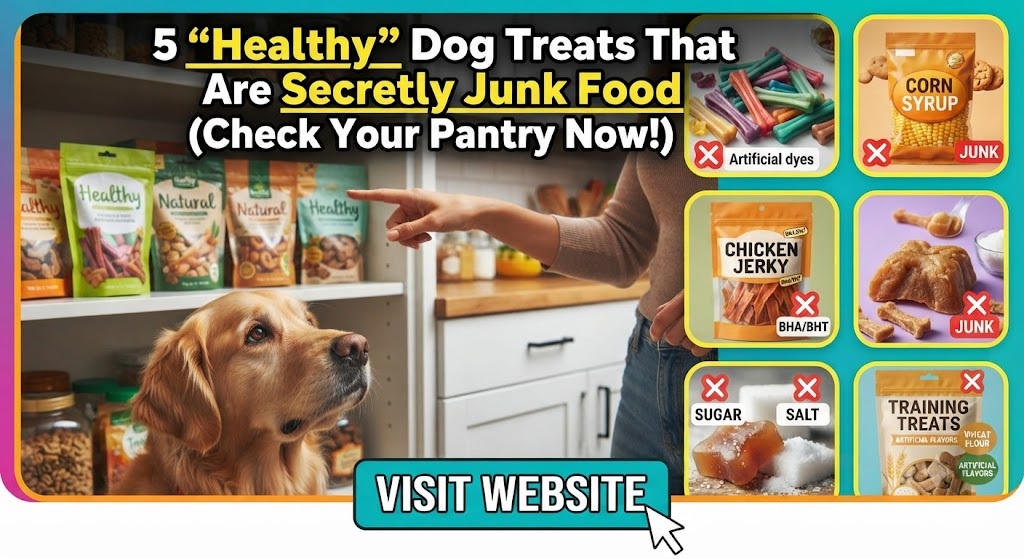
5 “Healthy” Dog Treats That Are Actually JUNK (Check Your Pantry Now!)
1. Why “Healthy” Dog Treats Aren’t Always Healthy
- The truth behind pet food marketing
- How misleading labels fool dog owners
- Why reading the ingredient list matters more than the packaging
2. Warning Signs of a Low-Quality Dog Treat
- Artificial colors and preservatives
- Added sugars and syrups
- Excess salt and unhealthy fats
- Meat by-products and vague ingredient names
- Fillers like corn, wheat, and soy
3. Junk Treat #1: Rawhide Chews
- Why rawhide isn’t as natural as it seems
- Choking and digestive blockage risks
- Chemical processing concerns
- Safer chew alternatives
4. Junk Treat #2: Bacon-Flavored Dog Treats
- High sodium content
- Artificial smoke flavor and preservatives
- Why too much salt is dangerous for dogs
- Healthier protein-based options
5. Junk Treat #3: Colorful Biscuit Treats
- Artificial food dyes explained
- Empty calories with little nutrition
- Hidden sugars and fillers
- Better biscuit choices
6. Junk Treat #4: Yogurt Drops and Sweet Treats
- Hidden sugar and corn syrup
- Why dogs don’t need sugary snacks
- Lactose concerns for sensitive dogs
- Healthier frozen treats
7. Junk Treat #5: Cheap Jerky Treats with Mystery Ingredients
- Imported jerky concerns
- Artificial preservatives
- Unclear meat sources
- How to choose safer jerky treats
8. Pantry Check: Ingredients You Should Avoid
- BHA, BHT, and ethoxyquin
- Artificial colors (Red 40, Yellow 5, Blue 2)
- Propylene glycol
- Corn syrup and added sugar
- Excessive salt
- Generic “meat meal” or “animal digest”
9. Ingredients You Want to See Instead
- Real meat as the first ingredient
- Limited ingredient recipes
- Natural preservatives like mixed tocopherols
- Pumpkin, blueberries, carrots, and sweet potatoes
- Omega-3-rich ingredients
10. How to Read Dog Treat Labels Like a Pro
- Check the first five ingredients
- Understand the guaranteed analysis
- Watch serving sizes and calorie content
- Avoid misleading marketing terms like “natural” and “premium”
11. Vet-Recommended Healthy Dog Treat Alternatives
- Fresh carrots
- Apple slices (without seeds)
- Blueberries
- Green beans
- Pumpkin
- Freeze-dried single-ingredient meat treats
12. Homemade Dog Treat Recipes
- Peanut butter and pumpkin bites
- Frozen yogurt and blueberry treats
- Sweet potato chews
- Chicken training treats
13. How Many Treats Should Your Dog Eat?
- The 10% calorie rule
- Adjusting treats by dog size
- Preventing obesity with portion control
14. Common Mistakes Dog Owners Make
- Overfeeding treats
- Ignoring ingredient labels
- Buying based on packaging
- Feeding treats meant for another life stage
15. Final Takeaway: Choose Nutrition Over Marketing
Small changes today can help your dog live a longer, healthier life
Always read labels carefully
Prioritize real, whole-food ingredients
Treats should support your dog’s health—not undermine it
3. “Dental Chews” Loaded with Sugars and Starches
We all want our dogs to have fresh breath and white teeth, and dental chews seem like the perfect solution. Some are even endorsed by veterinary associations, making them feel like a medical necessity.
Why It’s Marketed as Healthy
These treats are sold as “functional snacks” that “scrub away plaque” and “freshen breath with chlorophyll.”
The Ugly Truth: Sugar is the Secret Ingredient
Flip the bag over and look at the ingredient list of most popular dental chews. You will frequently find:
- Wheat Gluten or Corn Starch: These are sticky carbohydrates that actually cling to the teeth—the very thing you are trying to avoid.
- Glycerin: Used to keep the treat “chewy,” it is essentially a sugar alcohol.
- Powdered Cellulose: This is a fancy word for sawdust. It’s used as a fiber filler to give the chew its structure.
- Artificial Sweeteners: Some cheaper brands use sorbitol or other sweeteners to make the treat palatable.
The Health Risks
Cleaning a dog’s teeth with a sugar-laden, starchy chew is like a human trying to clean their teeth by eating a gummy bear. The carbohydrates break down into sugars in the mouth, which actually feeds the bacteria that cause plaque. Additionally, the high caloric density of these treats is a major contributor to canine obesity.
4. Store-Bought Jerky Treats (The “Glycerin” Problem)
Jerky treats look like pieces of dried meat. They look like something you might eat on a hiking trip, so they feel inherently healthy.
Why It’s Marketed as Healthy
They are usually labeled “High Protein,” “Real Meat First,” and “Low Fat.” They appeal to the dog’s carnivorous nature.
The Ugly Truth: Humectants and Imported Risks
The issue with store-bought jerky is twofold. First, many are treated with Vegetable Glycerin. While technically safe, it is often derived from the biodiesel industry or processed with chemicals to keep the meat soft and pliable. Without it, real jerky would be hard and brittle.
Second, the pet food industry has a dark history with jerky treats imported from overseas (specifically China). For years, thousands of dogs became ill or died from Fanconi-like syndrome after consuming jerky treats that were tainted with unlisted chemicals or antibiotics.
The Health Risks
Beyond the toxicity risks of imported goods, many jerky treats contain high levels of salt (sodium) to preserve the meat. Excessive salt can lead to dehydration and kidney strain, especially in older dogs or those with underlying health issues.
5. Fruit-Flavored “Yogurt Drops” or “Smoothie” Bites
In the era of “humanizing” pets, treats that look like human snacks—like yogurt-covered raisins (without the raisins, hopefully!) or fruit drops—have become incredibly popular.
Why It’s Marketed as Healthy
They use “real fruit” or “probiotic yogurt” as a selling point. They are often colorful and shaped like little stars or hearts, making the owner feel like they are giving their dog a special dessert.
The Ugly Truth: It’s Mostly Palm Oil and Sugar
If you look at the ingredients of these “yogurt” drops, you will find that yogurt is often the 5th or 6th ingredient, listed after sugar, hydrogenated palm oil, and whey powder.
- Fractionated Palm Oil: This is a saturated fat that offers zero nutritional value and is difficult for dogs to digest.
- Artificial Colors: That “strawberry” red or “blueberry” blue usually comes from Red 40 or Blue 2, which have been linked to hyperactivity and even cancer in some animal studies.
- Artificial Flavors: Instead of real fruit, many use “natural flavors,” which are lab-created chemicals designed to mimic the taste of fruit.
The Health Risks
These treats are pure empty calories. They can cause upset stomachs, diarrhea, and pancreatitis (a painful inflammation of the pancreas) due to the high fat and sugar content.
The Hidden Killers: 4 Red-Flag Ingredients to Avoid
If you want to be a savvy pet parent, you need to look past the marketing and read the Guaranteed Analysis and the Ingredient List. If you see any of the following four ingredients, put the bag back on the shelf:
1. BHA, BHT, and Ethoxyquin
These are synthetic antioxidants used as preservatives to prevent fats from going rancid. BHA and BHT are known carcinogens in laboratory animals, and Ethoxyquin is a pesticide that is banned in human food but still allowed in pet food.
2. Propylene Glycol
Often found in “moist” or “semi-moist” treats to keep them from drying out. While the FDA considers it “generally recognized as safe” for dogs in small amounts, it is chemically related to antifreeze. It is absolutely toxic to cats and has no place in a high-quality dog diet.
3. “Meat By-Products” or “Animal Digest”
These are “mystery meats.” When a label doesn’t specify the animal (e.g., “Chicken” or “Beef”), it means the meat can come from any source. “Animal digest” is a chemically produced broth made from unspecified animal tissues. If the manufacturer doesn’t want to name the animal, you shouldn’t want your dog eating it.
4. Caramel Color and Red 40
Dogs do not care what color their treats are. They see a limited color spectrum. Artificial colors are added solely to appeal to you, the human buyer. Many of these dyes have been linked to behavioral issues and allergic reactions in pets.
How to Audit Your Pantry (The 3-Step Process)
Now that you know the culprits, it’s time to take action. Go to your pantry right now and follow these three steps:
Step 1: The “First Three” Rule
Look at the first three ingredients. If any of them are sugar (including honey, molasses, or corn syrup), pea flour, or a mystery meat byproduct, that treat is junk. The first ingredient should always be a named protein (Chicken, Beef, Salmon).
Step 2: The “Origin” Check
Check where the treat was manufactured. “Distributed by” a US company does not mean it was made in the US. Look for “Made in the USA,” “Made in Canada,” or “Made in New Zealand.” Avoid treats with ingredients sourced from countries with lax food safety regulations.
Step 3: The “Smell” Test
Does the treat smell like real food? If it smells like a chemical factory or a bag of sugar, it probably is. Real meat treats should smell like meat.
The Healthy Alternatives: What Should You Feed Instead?
You don’t have to stop giving your dog treats; you just have to give them real treats. Here are the best alternatives that are truly healthy:
- Single-Ingredient Freeze-Dried Treats: Look for bags that contain only one ingredient: “Freeze-dried beef liver” or “Freeze-dried salmon.” These retain all the nutrients of the raw meat without the preservatives.
- Fresh Vegetables: Most dogs love the crunch of a raw carrot, a green bean, or a slice of cucumber. These are low-calorie, high-fiber, and great for weight management.
- Dehydrated Sweet Potatoes: If you want a “chewy” treat, dehydrated sweet potato slices are a fantastic, fiber-rich alternative to rawhide.
- Blueberries: Nature’s antioxidant powerhouse. They are small, low-calorie, and perfect for training.
- Plain, Boiled Chicken: It doesn’t get better than this. It’s cheap, high-protein, and dogs will do almost anything for a piece of real chicken.
Conclusion: Be the Guardian Your Dog Thinks You Are
Your dog trusts you completely. When you reach into the pantry and pull out a treat, they don’t see a label, a price tag, or a marketing claim—they see a gift from their favorite person.
The pet food industry is full of “junk” masquerading as health food, but you have the power to change that. By choosing treats with transparent ingredients, avoiding chemical preservatives, and opting for whole foods, you aren’t just giving your dog a snack—you are giving them a longer, healthier, and happier life.
Check your pantry today. If it’s junk, toss it. Your dog is worth it.