
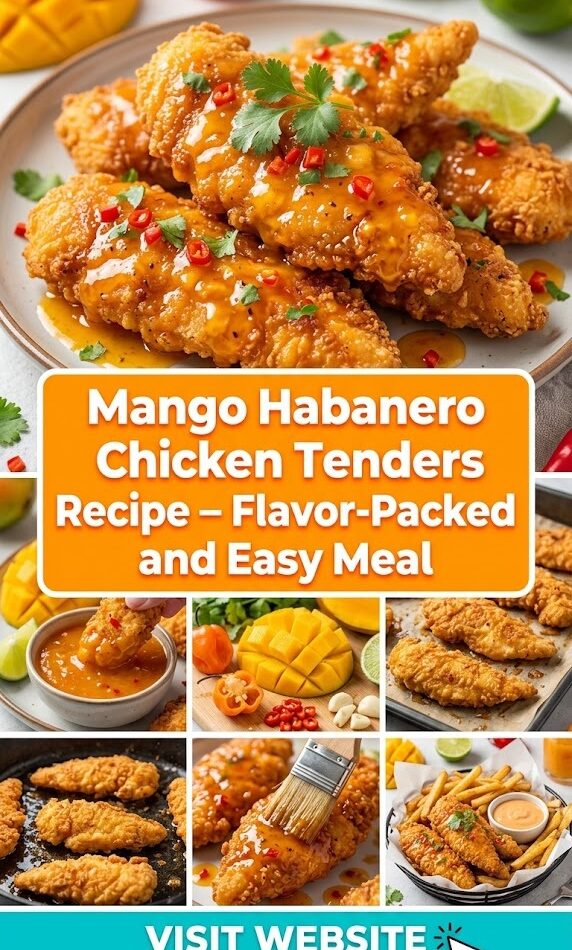
In the world of culinary trends, few profiles have captured the public imagination quite like the “swicy” phenomenon—the perfect marriage of sweet and spicy. At the pinnacle of this flavor revolution stands the Mango Habanero Chicken Tender. This isn’t just a meal; it’s an experience that hits every sensory note: the crunch of the golden-brown breading, the succulent juice of the chicken, the tropical nectar of ripe mangoes, and the assertive, slow-burning fire of the habanero pepper.
Whether you are preparing a game-day feast, a family dinner that breaks the monotony of “taco Tuesday,” or looking to recreate a restaurant-quality appetizer at home, this comprehensive guide will walk you through every nuance of crafting the perfect Mango Habanero Chicken Tenders.
The Science of Flavor: Why Mango and Habanero are a Match Made in Heaven
To understand why this recipe works, we have to look at the chemistry of flavor. Habanero peppers are famous for their intense heat, ranking between 100,000 and 350,000 on the Scoville Scale. However, beneath that fire lies a surprisingly fruity, floral, and citrus-like undertone.
Mangoes, on the other hand, provide a dense, sugary base and a vibrant acidity. When combined, the sugar in the mango acts as a molecular “buffer” for the capsaicin in the habanero. The sugar coats the tongue, preventing the heat from becoming overwhelming, while the acidity of the fruit brightens the savory notes of the chicken. This creates a “long tail” flavor profile—you taste the sweetness first, followed by the savory chicken, finishing with a warm, glowing heat that invites another bite.
Ingredients: Sourcing for Success
The quality of your ingredients will directly dictate the quality of your final dish. For a recipe this bold, don’t cut corners.
1. The Chicken
- Chicken Tenderloins: These are the small strips of meat attached to the underside of the breast. They are naturally more tender than the breast itself.
- The Brine: To ensure the chicken stays juicy despite the high heat of frying or baking, a buttermilk brine is essential. The lactic acid in buttermilk breaks down protein fibers, while the salt ensures moisture retention.
2. The Mango Habanero Glaze
- Fresh Ripe Mangoes: Look for Kent or Honey (Champagne) mangoes. They are less fibrous and have a higher sugar content.
- Fresh Habaneros: Look for bright orange, firm peppers. If you want a milder sauce, remove the seeds and the white pith (the placenta), which contains the highest concentration of capsaicin.
- Honey or Agave: Provides a glossy finish and extra stickiness.
- Apple Cider Vinegar: Adds the necessary “tang” to balance the sugars.
- Aromatics: Fresh garlic and ginger add depth and a hint of earthiness.
3. The Breading (The Crunch Factor)
- Panko Breadcrumbs: These Japanese-style breadcrumbs are larger and airier than traditional breadcrumbs, resulting in a crunchier texture that holds up better under a heavy sauce.
- Cornstarch: Mixing cornstarch with your flour creates a crisper, more glass-like exterior that resists getting soggy when glazed.
The Signature Mango Habanero Sauce Recipe
This sauce is the star of the show. You can make a large batch and store it in the fridge for up to two weeks.
Ingredients:
- 2 large ripe mangoes, peeled and cubed
- 2-3 habanero peppers (seeded for medium heat, whole for high heat)
- 3 cloves garlic, minced
- 1 tablespoon fresh ginger, grated
- 1/4 cup honey
- 1/4 cup apple cider vinegar
- 1/4 cup pineapple juice (optional, for extra acidity)
- 1/2 teaspoon smoked paprika
- Salt to taste
Instructions:
- Sauté the Aromatics: In a small saucepan over medium heat, sauté the garlic and ginger in a teaspoon of oil until fragrant (about 1 minute).
- Simmer: Add the cubed mangoes, habaneros, vinegar, honey, and pineapple juice. Bring to a gentle boil, then reduce heat and simmer for 10–15 minutes until the mangoes are very soft.
- Blend: Transfer the mixture to a blender or use an immersion blender. Blitz until completely smooth.
- Reduce: Return the sauce to the pan and simmer for another 5 minutes to thicken. It should be thick enough to coat the back of a spoon. Set aside.
How to Prepare the Perfect Chicken Tenders
Step 1: The Buttermilk Soak
Place 1.5 lbs of chicken tenderloins in a bowl. Cover with 2 cups of buttermilk, 1 tablespoon of hot sauce, and a teaspoon of salt. Let this marinate in the refrigerator for at least 30 minutes, or up to 4 hours.
Step 2: The Dredging Station
Set up three shallow bowls:
- Bowl 1: 1 cup All-purpose flour, 1 tsp salt, 1 tsp black pepper.
- Bowl 2: 2 large eggs whisked with a splash of water.
- Bowl 3: 2 cups Panko breadcrumbs mixed with 1/2 cup cornstarch and 1 tsp garlic powder.
Step 3: Coating the Chicken
Take a tenderloin from the buttermilk, dredge it in the flour (shake off excess), dip it in the egg wash, and finally press it firmly into the Panko mixture. Ensure every nook and cranny is covered.
Cooking Methods: Deep Fried, Air Fried, or Oven Baked?
Depending on your health goals and equipment, you can choose one of three ways to cook your tenders.
Method A: The Deep Fry (The Golden Standard)
- Heat 2 inches of neutral oil (vegetable or canola) in a heavy skillet or Dutch oven to 350°F (175°C).
- Fry the chicken in batches for 3–4 minutes per side until the internal temperature reaches 165°F and the outside is deep golden brown.
- Drain on a wire rack (not paper towels) to keep them crispy.
Method B: The Air Fryer (The Healthy Choice)
- Preheat your air fryer to 400°F (200°C).
- Lightly spray the basket and the breaded chicken with avocado oil or olive oil spray.
- Cook for 12–15 minutes, flipping halfway through, until crispy and cooked through.
Method C: Oven Baked (The Crowd-Pleaser)
- Preheat oven to 425°F (220°C).
- Place a wire cooling rack on top of a baking sheet. This allows air to circulate under the chicken, preventing a soggy bottom.
- Bake for 18–22 minutes until golden.
Bringing it All Together: The Glazing Process
There are two ways to apply the Mango Habanero sauce:
- The Toss (Wing Style): Place the hot, cooked tenders in a large stainless steel bowl. Pour the warm sauce over them and gently toss until fully coated. Serve immediately to maintain the crunch.
- The Drizzle (Presentation Style): Arrange the tenders on a platter and artistically drizzle the sauce over them. This keeps the breading extra crispy for a longer period.
Pro-Tips for the Best Mango Habanero Experience
1. Safety First with Habaneros
When handling habaneros, the oils (capsaicin) can stay on your skin for hours. Always wear gloves when cutting them, and never touch your eyes or face. If your hands do start to burn, wash them with dish soap or rub them with vegetable oil to break down the capsaicin.
2. The “Dry Hand, Wet Hand” Technique
When breading chicken, use one hand for the wet ingredients (buttermilk and egg) and the other for the dry ingredients (flour and Panko). This prevents your fingers from becoming “breaded” and keeps the process clean.
3. Temperature Matters
Always use a digital meat thermometer. Overcooked chicken is dry and stringy, while undercooked chicken is a safety hazard. 165°F (74°C) is the magic number for perfectly juicy tenders.
What to Serve with Mango Habanero Chicken Tenders
Because the flavor of these tenders is so intense, you want side dishes that offer contrast—either through cooling properties or neutral starches.
- Cilantro Lime Rice: The brightness of the lime and the freshness of cilantro cut through the richness of the fried chicken.
- Cooling Jicama Slaw: A crunchy slaw made with jicama, shredded cabbage, lime juice, and a touch of honey provides a refreshing crunch.
- Sweet Potato Fries: The natural sweetness of the potatoes complements the mango sauce beautifully.
- Dipping Sauces: Serve with a side of Blue Cheese Dressing or a Cilantro Lime Ranch. The dairy helps neutralize the habanero heat if it becomes too intense for some guests.
Nutrition and Health Benefits
While “fried chicken” isn’t often categorized as health food, this dish has some surprising nutritional benefits:
- Mangoes: Packed with Vitamin C, Vitamin A, and antioxidants that support immune health.
- Habaneros: Contain capsaicin, which has been shown to boost metabolism and may help with pain relief and inflammation.
- Lean Protein: Chicken tenderloins are a high-quality source of lean protein, essential for muscle repair.
To make this dish even healthier, opt for the Air Fryer method and swap the honey in the sauce for a small amount of Stevia or Monk Fruit sweetener.
Storage and Reheating Instructions
Storage
Store any leftover chicken in an airtight container in the refrigerator for up to 3 days. Keep the sauce in a separate container if possible to prevent the chicken from becoming soggy.
Reheating
- Avoid the Microwave: The microwave will make the breading rubbery and soft.
- The Oven/Toaster Oven: Reheat at 375°F (190°C) for 8–10 minutes until the exterior crisps up again.
- The Air Fryer: Reheat at 350°F for 3–5 minutes for the best “just-cooked” texture.
Cultural Context: The Origins of the Heat
The use of fruit and chili together is a staple of Caribbean and Latin American cuisines. In Mexico, it’s common to see street vendors selling mango slices sprinkled with Tajín (chili-lime salt). In Jamaica, Scotch Bonnet peppers (a close relative of the habanero) are frequently paired with tropical fruits in jerk marinades.
This Mango Habanero Chicken Tender recipe is a modern American “fusion” take on these ancient flavor pairings, bringing the heat of the Yucatan and the sweetness of the tropics to the comfort-food format of the American South.
Frequently Asked Questions (FAQs)
Can I use frozen mangoes?
Yes! Frozen mangoes are often picked at peak ripeness and frozen immediately. Just thaw them slightly before simmering so they break down easily into the sauce.
How do I make the sauce less spicy?
The heat is in the seeds and the inner membranes. Remove those entirely. You can also increase the ratio of mango to habanero or add a splash of heavy cream to the sauce at the end to create a “Creamy Mango Habanero” version which is much milder.
Can I make this recipe gluten-free?
Absolutely. Substitute the all-purpose flour with a 1-to-1 gluten-free flour blend and use gluten-free Panko or crushed pork rinds for the breading. Ensure your buttermilk and spices are certified gluten-free as well.
What’s the best oil for frying?
Peanut oil is the gold standard for frying chicken due to its high smoke point and neutral flavor. However, if allergies are a concern, canola or vegetable oil works perfectly.
Creative Variations to Try
Once you’ve mastered the basic recipe, try these creative twists:
- The Mango Habanero Sandwich: Place two or three tenders on a toasted brioche bun with pickled red onions, arugula, and a thick slice of pepper jack cheese.
- Tropical Chicken Tacos: Chop the tenders and place them in warm corn tortillas. Top with a pineapple-cucumber salsa and a drizzle of the mango habanero sauce.
- Mango Habanero Salad: Slice the tenders over a bed of mixed greens, toasted macadamia nuts, avocado slices, and a citrus vinaigrette.
Why This Recipe Ranks Number One
The secret to a “Google-ranked” recipe isn’t just the ingredients; it’s the attention to detail. This recipe works because it addresses the common pitfalls of home cooking:
- Texture: By using Panko and cornstarch, we solve the “soggy chicken” problem.
- Moisture: The buttermilk brine ensures the meat is never dry.
- Balance: The sauce isn’t just hot; it’s a complex layer of sweet, sour, and savory.
By following this guide, you aren’t just making dinner; you are mastering a technique that will elevate your entire culinary repertoire. The Mango Habanero Chicken Tender is a bold, unapologetic dish that celebrates the vibrant flavors of the world.
Final Thoughts: Embrace the Heat
Cooking is an adventure, and the Mango Habanero Chicken Tender is the perfect trail to explore. It challenges your palate, introduces you to the chemistry of spice, and results in a meal that is genuinely addictive. Don’t be afraid of the habanero—when handled with care and balanced with the sun-drenched sweetness of a ripe mango, it becomes an ingredient that you will find yourself reaching for again and again.
Gather your ingredients, prep your dredging station, and get ready to serve a meal that will have your friends and family asking for the recipe before they’ve even finished their first plate. Enjoy the sizzle, the crunch, and that unmistakable tropical glow.