
My Dog Threw Up Yellow Bile but Is Acting Normal—Should I Be Worried?
You wake up, stretch, and step out of bed—only to find a puddle of yellow foam on the floor. Your dog, meanwhile, is wagging their tail, eager for breakfast, and acting perfectly fine.
You’re not alone in feeling confused. It’s a scene many dog owners know well. The sight of your beloved pet throwing up yellow bile can be alarming, but if they seem completely normal otherwise, you’re probably wondering: Is this an emergency? What causes it? And what should I do next?
This guide breaks down the common reasons behind this puzzling symptom, helps you identify when it’s a simple fix and when a vet visit is needed, and provides actionable steps to help your dog feel better.
Why Is the Vomit Yellow? Understanding Bile
The yellow substance in your dog’s vomit is most likely bile. Bile is a digestive fluid produced by the liver, stored in the gallbladder, and released into the small intestine to help break down fats and aid in digestion. It is naturally yellow or greenish, often appearing foamy or bubbly .
When your dog vomits yellow fluid, it usually means their stomach is empty. In this state, bile can leak from the small intestine back into the stomach. Because bile is very alkaline, it can react with the acidic environment of the empty stomach, causing irritation and triggering the vomiting reflex .
The #1 Suspect (When They’re Acting Normal): Bilious Vomiting Syndrome
For dogs who are otherwise healthy but regularly vomit yellow foam or fluid, the most likely culprit is Bilious Vomiting Syndrome (BVS) .
What is BVS?
In simple terms, BVS is “empty stomach syndrome.” It occurs when a dog goes too long without eating, typically overnight. The long gap between dinner and breakfast allows bile to build up and reflux into the stomach, causing nausea and vomiting . A classic sign of BVS is vomiting that happens early in the morning or in the middle of the night .
Key Signs of BVS:
- Vomiting yellow bile or foam
- Vomiting occurs primarily in the early morning or after a long fast
- The dog is otherwise normal: They have a good appetite, normal energy levels, and no weight loss or diarrhea
- They may show subtle signs of nausea before vomiting, like lip-smacking, drooling, or panting
Treatment for BVS
The good news is that BVS is typically not a serious condition and is easy to manage. The most effective treatment is simple: feed your dog more frequently .
Try these steps, often in combination :
- A Late-Night Snack: Offer a small meal or snack right before bedtime. This helps keep the stomach from being empty for too long overnight .
- More Frequent Meals: Instead of one large meal, divide your dog’s daily food allowance into three or four smaller meals spread throughout the day .
- Consider a Diet Change: If the first two steps don’t help, your vet might recommend a prescription diet that is easy to digest or high in fiber .
- Medication: In stubborn cases, vets may prescribe medications like antacids (e.g., famotidine, omeprazole) or prokinetic drugs that help the stomach empty faster .
Important: The goal is to change the frequency of meals, not the amount. You should be splitting the same daily portion of food into smaller, more frequent servings .
Other Possible Causes (When “Normal” Can Be Deceiving)
While BVS is the most common reason for yellow vomit in a seemingly healthy dog, it’s crucial to remember that other, more serious conditions can also cause this symptom. Your dog might appear “normal” in the early stages of an illness .
Here are other potential causes a veterinarian will consider:
- Dietary Indiscretion: Eating something that doesn’t agree with them—like garbage, too many fatty table scraps, or a sudden change in diet—can irritate the stomach and lead to vomiting, even when the stomach is empty .
- Gastrointestinal Diseases: Conditions like inflammatory bowel disease (IBD), stomach ulcers, or infections can cause chronic vomiting of bile .
- Intestinal Blockage: If a dog swallows a foreign object (like a toy or sock), it can create a partial or complete blockage. The dog will often vomit food first, and then later vomit bile once the stomach is empty. This is a medical emergency . Signs of a blockage often include severe abdominal pain, repeated vomiting, and a lack of bowel movements .
- Pancreatitis: Inflammation of the pancreas is often triggered by a high-fat meal. It can cause vomiting (often yellow), loss of appetite, and intense abdominal pain .
- Food Allergies or Intolerances: An adverse reaction to a specific protein in their food can manifest as chronic vomiting of yellow fluid .
- Addison’s Disease (Hypoadrenocorticism): This condition occurs when the adrenal glands don’t produce enough hormones. Vomiting can be a symptom, and it’s sometimes called “the great pretender” because it mimics other illnesses .
- Other Systemic Diseases: Liver disease, kidney disease, and other organ dysfunctions can also cause vomiting .
When to Call the Vet
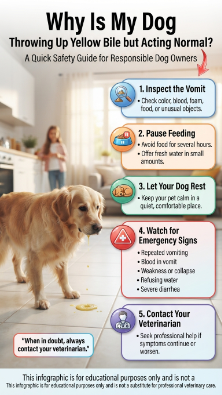
Occasional vomiting of yellow bile in an otherwise happy and healthy dog is usually not a cause for panic. However, you should contact your veterinarian if you notice any of these “red flags” :
- The vomiting becomes frequent (more than once) or persistent over several days .
- Your dog shows other signs of illness like:
- Lethargy or weakness
- Diarrhea
- Loss of appetite or inability to keep water down
- Signs of abdominal pain (whining, pacing, hunched posture)
- Distended (bloated) abdomen
- There is blood in the vomit or in their stool .
- The vomiting is non-productive (retching but nothing or only foam comes up), which could be a sign of bloat (GDV), a life-threatening emergency .
A good rule of thumb: If the vomiting is a one-time event and your dog is acting completely normal, monitoring at home is reasonable. If they vomit more than once in 24 hours, or if you have any concerns at all, it’s always safer to consult a vet .
What You Can Do at Home Right Now
If your dog vomits yellow bile but is otherwise alert and playful, here are some steps you can take :
- Withhold Food Temporarily: Give your dog’s stomach a chance to rest by withholding food for 8-12 hours. Do not fast a puppy, a senior dog, or a dog with an existing health condition without consulting a vet first .
- Offer Water Carefully: Allow access to fresh water but in small amounts at a time. Drinking too much too fast can trigger more vomiting .
- Monitor Closely: Keep a close eye on your dog’s behavior, appetite, and bathroom habits. Track how many times they vomit and what it looks like .
- Reintroduce Food Slowly: After the fasting period, offer a small portion of a bland diet (e.g., boiled, plain chicken and white rice). If they keep it down, you can gradually increase the portion size over a few days before slowly transitioning back to their regular food .
Frequently Asked Questions
Q: My dog threw up yellow bile once but is eating and playing normally. Should I still be worried?
A: Probably not. If it’s a single, isolated incident and your dog is otherwise normal, it’s likely a case of an empty stomach (BVS). Monitor them closely, and try feeding them a small snack before bed . If it happens again, consult your vet.
Q: Why does my dog only vomit yellow in the morning?
A: This is the classic sign of Bilious Vomiting Syndrome. The long gap between their evening meal and breakfast allows bile to irritate the empty stomach. Try the at-home solutions mentioned above to manage it .
Q: Can I give my dog Pepto-Bismol or antacids for vomiting?
A: No. You should never give your dog human medications without specific instructions from a veterinarian, as they can be toxic or cause serious side effects .